
Our tool for managing your permission to our use of cookies is temporarily offline. Therefore some functionality is missing.
MINI RECYCLING.
MINI is committed to minimizing environmental impacts throughout the entire vehicle life cycle – from production and use to service and end-of-life recovery. The foundation for environmentally responsible recycling is already established during the development and production of every new MINI vehicle. Through the consistent application of "Design for Recycling," MINI ensures a holistic approach to product development.
ENVIRONMENTALLY RESPONSIBLE VEHICLE RECYCLING.
The recycling of end-of-life vehicles takes place at authorized dismantling facilities. Every kilogram of automotive scrap is directed to the most environmentally and economically efficient recovery process. Valuable raw materials are returned to the production cycle, reducing the burden on the environment. Controlled return, pre-treatment, dismantling, and recovery of the remaining vehicle are the four stages of environmentally responsible end-of-life vehicle recycling.
Vehicle recycling begins with the controlled return of the vehicle to an authorized take-back point or dismantling facility. Only these facilities can issue the Certificate of Destruction required for the final deregistration of the vehicle.
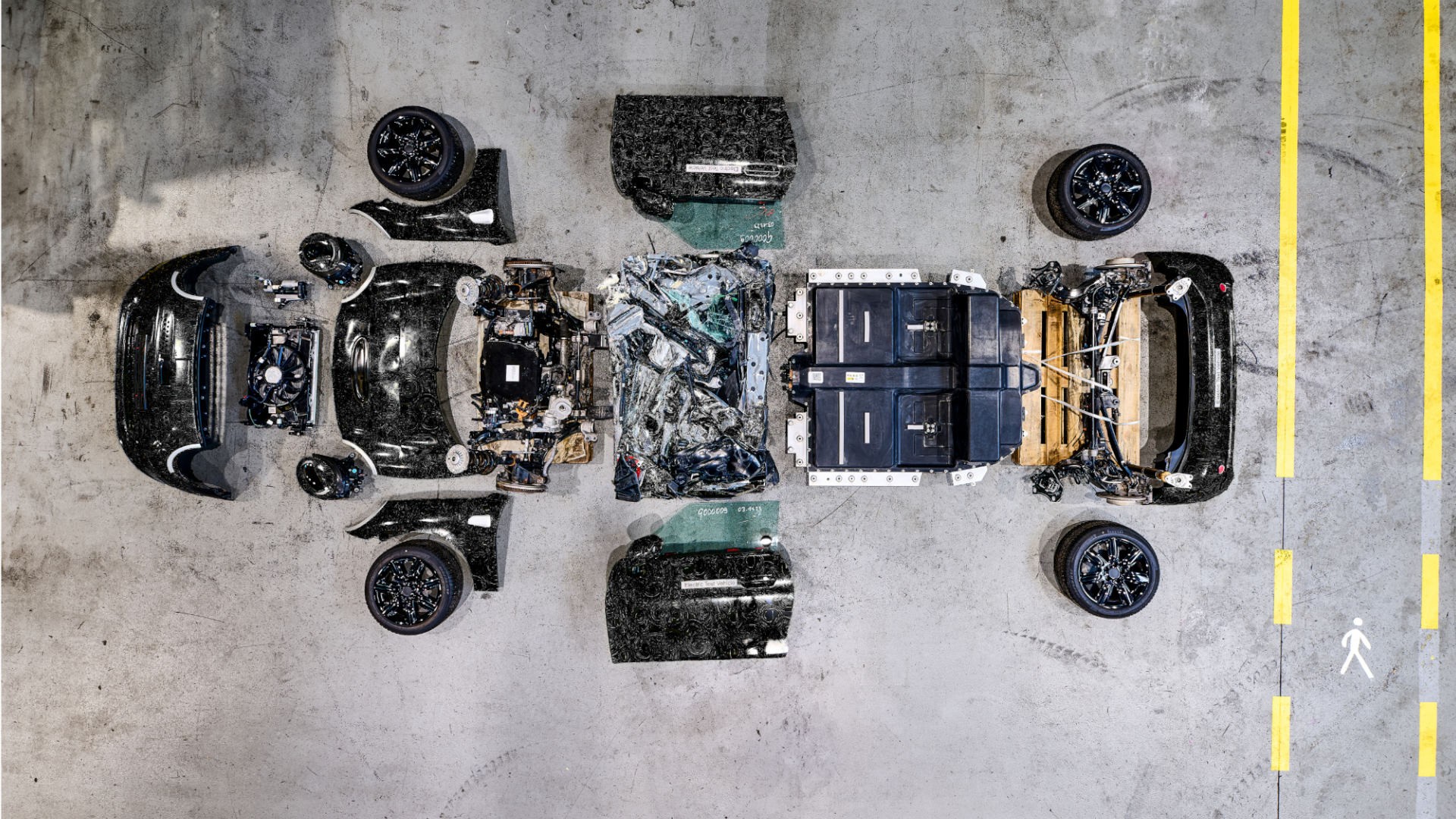
During pre-treatment, the battery is removed first, and airbags and other pyrotechnic components are neutralized. The actual recycling process begins with the removal of all operating fluids at a dedicated fluid-drain station. At this workstation, for example, refrigerant from the air-conditioning system and brake fluid are extracted, coolant, engine oil, and transmission oil are drained, and fuel is removed using a special suction device with an integrated drill. The different fluids are collected separately in storage containers and processed or recycled by specialized companies.
During dismantling, parts are removed for reuse and material recycling. For example, professionally dismantled engines are refurbished through so-called high-quality recycling and reused. Valuable materials such as precious metals from catalytic converters are recycled through separate material recovery streams.
The legal requirements for the collection and recycling of waste batteries in Cyprus are governed by applicable national and European legislation. Information on the take-back and recycling of waste batteries and the relevant legal framework can be found on the website of the Federal Ministry for Agriculture and Forestry, Climate and Environmental Protection, Regions and Water Management (BMLUK). The take-back and recycling of industrial waste batteries, including high-voltage batteries from electric vehicles, is carried out in accordance with applicable legal requirements.
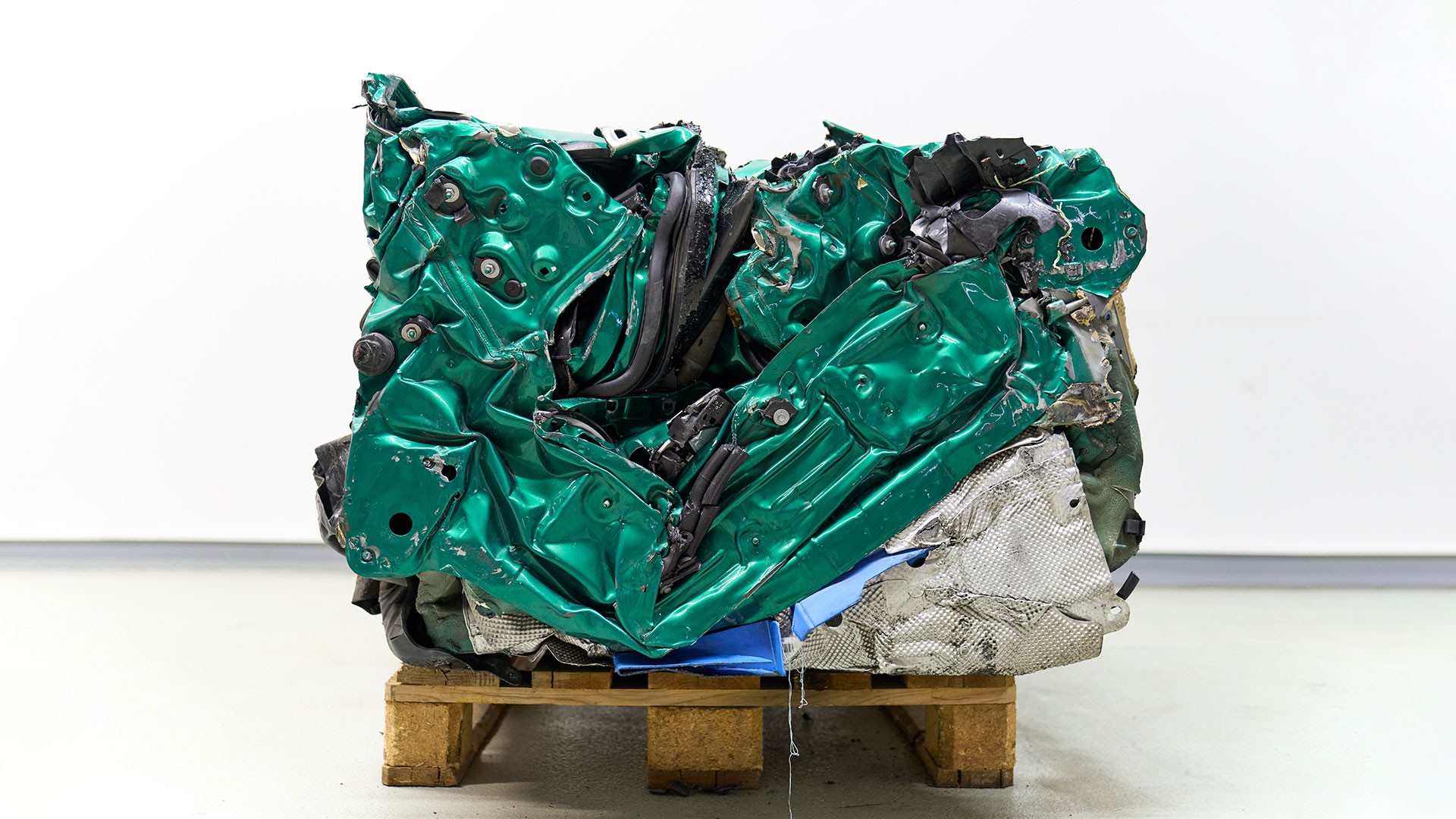
Color modified by AI.
DESIGN FOR RECYCLING.
Our specialists lay the foundation for efficient and environmentally compatible end-of-life vehicle treatment and disposal already during the product development process.
Through approval processes, MINI promotes the use of quality-assured and economically viable recycled plastics—materials recovered from end-of-life parts—in the manufacture of plastic components. Environmental impacts are systematically assessed through Life Cycle Assessment case studies. Virtual and physical dismantling analyses ensure that every MINI achieves the defined targets. The findings from these analyses are shared with all participants in the recycling process through training and detailed documentation. As a result, all MINI vehicles can undergo rapid and safe neutralization of pyrotechnic components, quick removal of all operating fluids, clear identification of plastic parts through material markings, and consistent promotion of recycled materials.
Pyrotechnic components such as airbags, battery safety terminals, or seatbelt pretensioners must be rendered inactive before vehicle recycling in a process known as neutralization. The fastest method is to trigger the components while they are still installed in the vehicle. To enable this, the vehicle electronics are designed during development to control and activate all pyrotechnic components through a standardized interface.
Vehicle development ensures that all fluids—including oils, fuel, coolant, brake fluid, air-conditioning refrigerant, and others—can be removed quickly and easily at the end of the vehicle’s life. Design for Recycling ensures that all fluid-carrying components are designed for quick access at the correct locations. Opening or drilling fluid-carrying components at their lowest point enables gravity-assisted drainage. Certain components, such as fuel tanks or shock absorbers, are emptied using specially developed extraction devices.
A particular challenge for Design for Recycling engineers is hydraulic systems integrated into the vehicle, such as the roof hydraulics of an automatic convertible top. Both access to the reservoir and the hydraulic position in which the reservoir is filled must be ensured.
All components are marked in accordance with international ISO standards. This allows materials to be clearly identified for possible segregated collection and recycling.
Recycled materials are recovered from end-of-life components and can be reused in suitable applications without compromising functionality. Its use is possible in components where it causes no functional limitations. This includes parts that are not safety-relevant and are not located within the direct field of vision. Wheel arch liners are particularly well suited to being manufactured from recycled plastics.
Taking ecological and economic considerations into account, recycled materials can be used for 15–20 percent by weight of the total plastic content of a vehicle. This helps close material loops and conserve resources.
Taking ecological and economic considerations into account, recycled materials can be used for 15–20 percent by weight of the total plastic content of a vehicle. This helps close material loops and conserve resources.
RETURN OF END-OF-LIFE VEHICLES.
In Cyprus, the take-back and recycling of end-of-life vehicles is carried out in accordance with applicable national and European legislation. End-of-life vehicles must be handed over to authorized collection or treatment facilities, where they are processed in an environmentally responsible manner. Recycling is performed in line with legal requirements that promote the circular economy and protect the environment and natural resources.
Do you have any further questions on this topic? Then send us an email: info@pilakoutasgroup.com.cy
MINI-appointed take-back facilities accept all MINI vehicles free of charge.
The following basic conditions must be met for free return:
- The end-of-life vehicle must have been registered within the European Union for at least one month immediately before its return.
- In addition, the end-of-life vehicle must be complete (in particular including engine, powertrain, bodywork, catalytic converter, value-relevant electronic components, and other essential parts) and free of waste.
A Certificate of Destruction may only be issued by an authorized dismantling facility or an authorized collection point acting on behalf of an authorized dismantling facility. Recognition of these facilities ensures compliance with environmental protection requirements under end-of-life vehicle regulations and must be verified by qualified experts. A collection point recognized by the motor trade association can be identified by the sign: "Authorized Collection Point for End-of-Life Vehicles".